


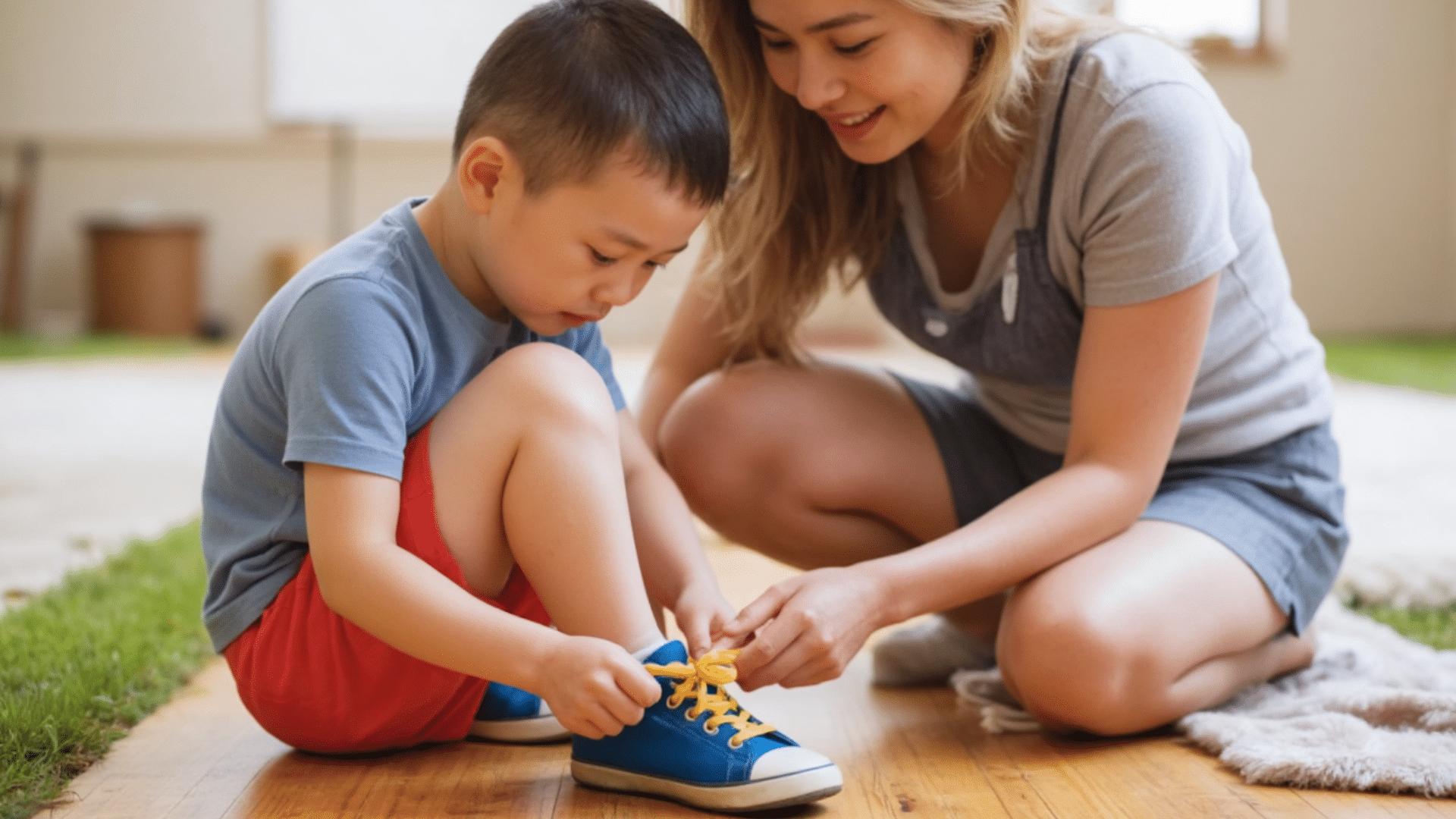
Tying shoelaces might seem like a small thing, but for a child, it’s a genuine milestone. One that comes with its own little moment of pride when they finally get it right.
The challenge is that shoe-tying isn’t as simple as it looks. Behind that simple loop and pull is a skill that takes real developmental groundwork.
Skills that many children simply aren’t wired for yet. That’s not a parenting problem. That’s just development.
This blog covers the when, the how, and the tips to make it stick.
When Age Do Kids Learn to Tie Their Shoes
Most children learn to tie their shoes between the ages of 5 and 7, with age 6 being the most common milestone. That said, anywhere from 4 to 8 is entirely normal. Every child’s timeline looks a little different.
Shoe-tying falls in this window because it requires fine motor control, two-handed coordination, and the ability to follow a multi-step sequence.
Skills that develop gradually through mid-childhood. Children who mostly wear Velcro or slip-ons may reach this milestone a little later simply because they practice less, and that’s perfectly okay.
Signs Your Child is Ready
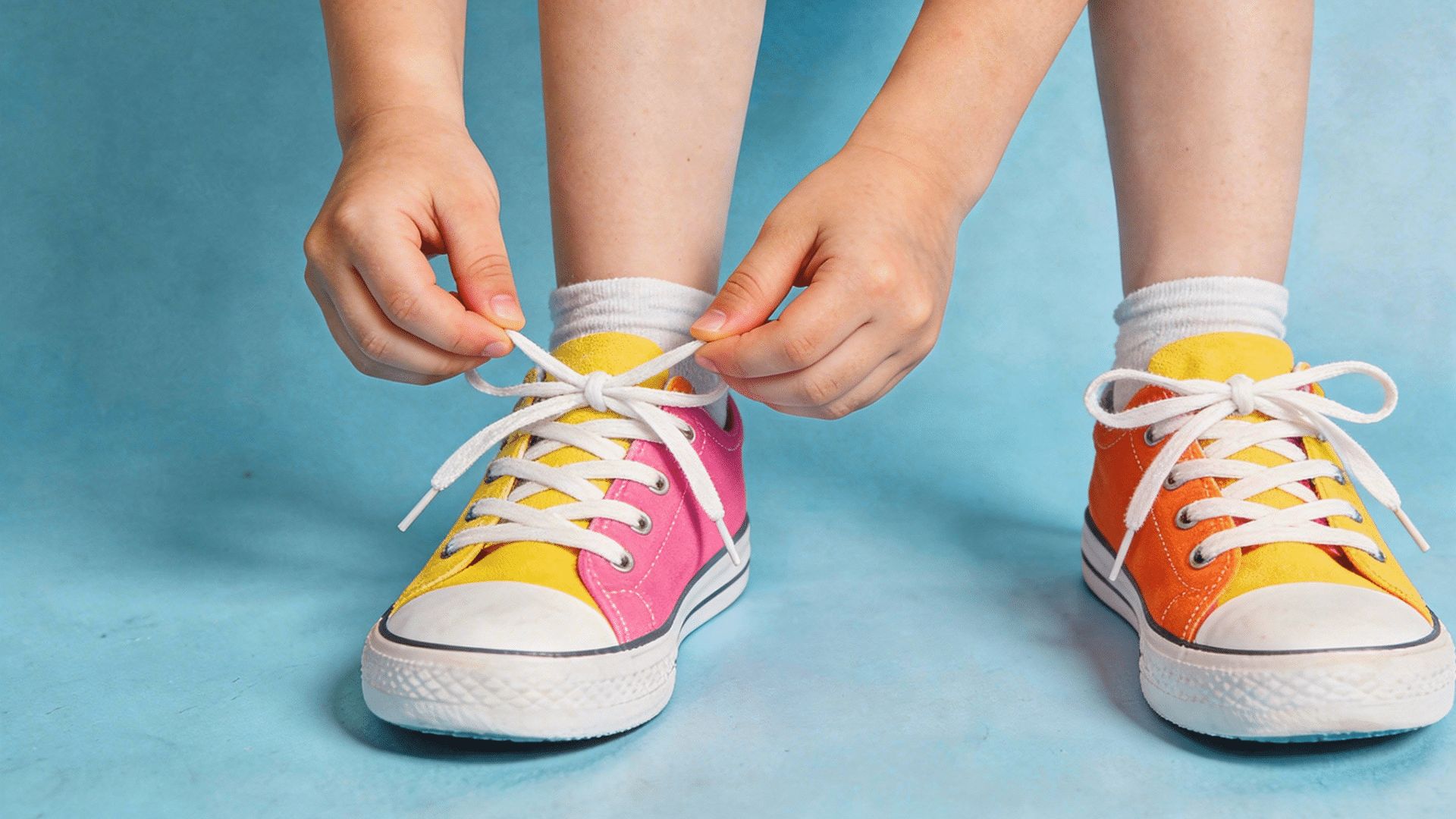
Take a moment to check for readiness signs. Make sure your child has developed the foundational skills needed to succeed. Once you confirm they are ready, you can move forward knowing they are positioned to learn the skill.
Starting too soon can turn a simple lesson into unnecessary frustration. Waiting until they are ready often makes learning feel much easier for both of you.
Look for readiness signs, which are mentioned below:
- Can button and unbutton clothes on their own
- Can follow directions with more than one step
- Can use both hands well to pick up and move small objects
- Stays calm and keeps trying when something feels challenging
Common Factors That May Delay Learning
Not every child masters shoe tying at the same pace, and that is completely normal. While readiness and practice play a big role, certain developmental or environmental factors can slow progress.
Understanding these influences can help you respond with the right support, rather than unnecessary concern.
1. Developing Hand Control
Shoe tying requires finger strength, coordination, and precise control. If your child struggles with tasks like holding a pencil or cutting with scissors, they may simply need more time to build those small muscle skills.
In some cases, extra support such as occupational therapy can help.
2. Learning Differences
Children with learning differences, such as dyslexia or ADHD, may find it difficult to follow the steps of shoe tying. Dyslexia can affect how they process directions, leading to confusion with the order of steps.
ADHD can cause distractions, making it hard for them to focus on the sequence for long enough to complete the task. Additionally, directional confusion can add extra difficulty, as remembering which loop goes where might be a challenge.
3. Not Enough Practice
Mastering the skill of tying shoes often requires consistent practice to build muscle memory. Children who only wear lace-up shoes occasionally may not have the chance to practice enough to become proficient.
Without repetition, it can be hard for them to remember the steps, and the process may feel overwhelming. To help, encourage regular practice sessions, even if they are short, so your child can develop their skills over time.
4. Fear of Getting It Wrong
Fear of failure can significantly impact a child’s ability to learn shoe tying. Some children may avoid practicing because they are afraid of making mistakes.
This fear can be fueled by perfectionism or frustration from previous failed attempts. If a child feels that they will never get it right, they may not even want to try. Gently reassure your child that it’s okay to make mistakes and that learning is a process.
Common Teaching Methods to Try
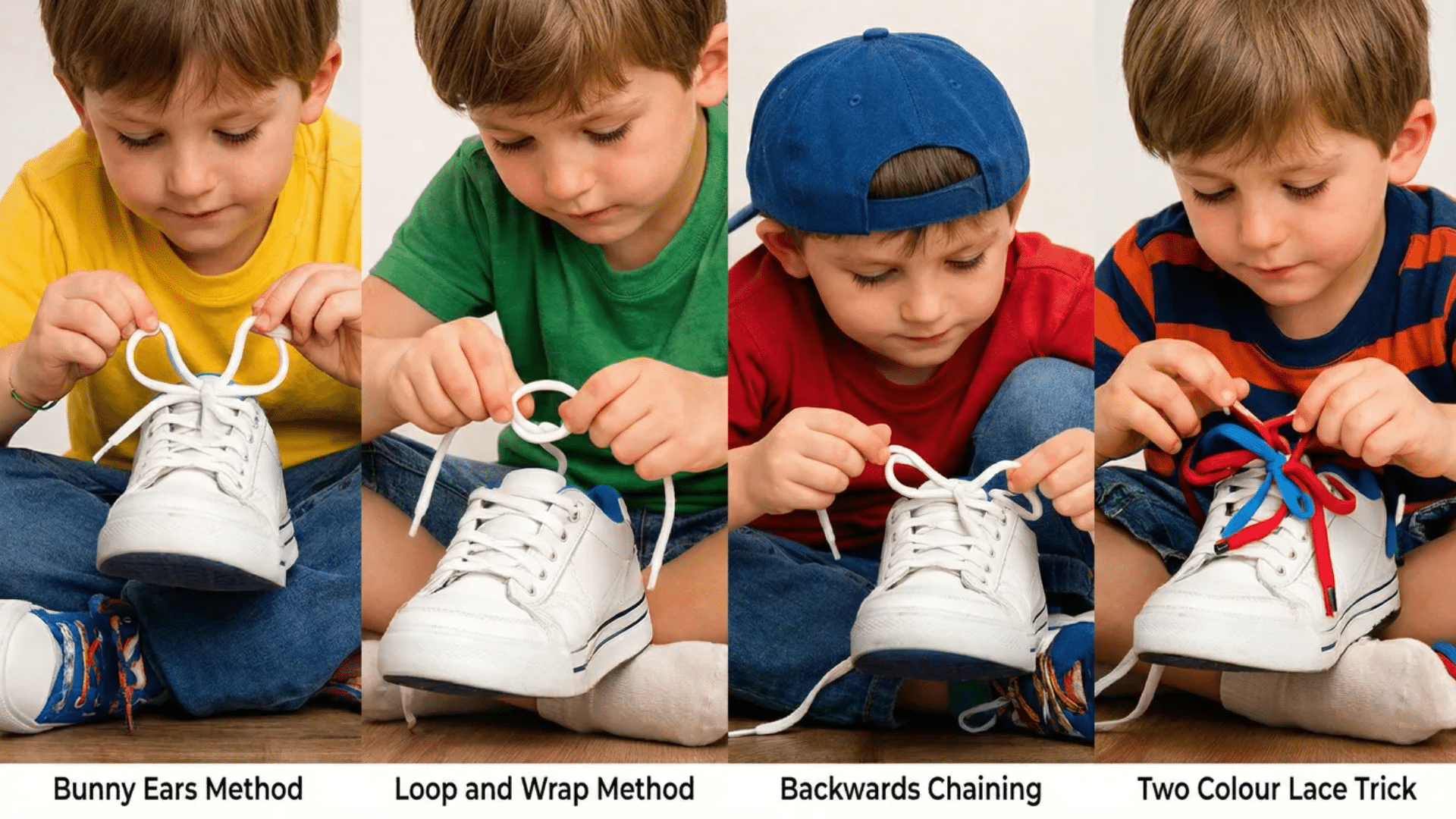
There is no single correct way to teach a child to tie their shoes. Some children learn best through visuals, others need hands-on repetition, and some respond to structured step-by-step practice.
Trying different approaches can help you find the method that matches your child’s learning style.
1. The Bunny Ears Method
The most popular method for young children is for good reason. Both hands do similar movements, which makes it less confusing than the traditional approach.
Step 1: Tie a basic starting knot, cross one lace over the other, and pull through.
Step 2: Make two loops, one with each hand. These are the “bunny ears.”
Step 3: Cross the two loops over each other.
Step 4: Pull one loop under and through the middle.
Step 5: Pull both loops tight until the knot is snug.
2. The Loop and Wrap Method
Slightly more advanced but faster once mastered. Great for children who pick up sequences quickly. It builds strong sequencing skills and improves hand coordination with practice.
Once the pattern clicks, many children find this method quicker and more efficient than others.
Step 1: Tie the starting knot cross and pull through.
Step 2: Make one loop with your dominant hand.
Step 3: Wrap the other lace around the base of the loop.
Step 4: Push the wrapped lace through the hole to form a second loop.
Step 5: Hold both loops and pull tight.
3. Backwards Chaining
Highly recommended by occupational therapists, especially for children who get frustrated easily. It allows your child to experience success at the end of the task from the very beginning.
Step 1: You complete all the steps except the very last one.
Step 2: Let your child do just the final pull to tighten the knot.
Step 3: Once they’ve mastered that, hand back the second-to-last step.
Step 4: Keep working backwards until your child owns the full sequence.
Step 5: Every session ends in success, which builds confidence alongside the skill.
4. Two Colour Lace Trick
A simple visual strategy that reduces confusion by making each lace easy to track. This simple but highly effective strategy makes shoe tying much easier to understand.
Using two different-coloured laces, your child can clearly see which lace is moving at each step.
Step 1: Replace regular laces with two different colours, one for each side.
Step 2: Cross the two colours and pull tight to form the starting knot.
Step 3: Make a loop with one colour so your child can clearly follow it.
Step 4: Wrap the second colour around the loop and push it through.
Step 5: Pull both loops tight and point out how each colour played its part.
Success Tips
Teaching your child to tie their shoes is not just about the method you choose, but how you guide the process. A supportive approach makes a huge difference in how quickly they learn.
- Consistent Practice: Five minutes of daily repetition is enough to build steady progress.
- Stay Patient: A calm and supportive tone helps your child stay focused.
- Small Steps: Teaching one part at a time makes the skill easier to manage.
- Lower Pressure: Practicing off the foot or in a relaxed setting reduces frustration.
- Let Them Try: Giving your child space to attempt it independently builds confidence.
Final Thoughts
Most children learn to tie their shoes in their own time, with a little guidance and a lot of patience. If your child is within the 5–8 age range and still working on it, chances are they’re right on track.
Focus on progress rather than perfection. With the right foundation, a supportive approach, and consistent practice, your child will master the skill and gain a meaningful boost in independence along the way.
And if you have concerns beyond that window, a quick conversation with your pediatrician or an occupational therapist can offer tailored support. Either way, those double-knotted laces are closer than you think.